Truth Doesn’t Change. Messaging Does.
Most B2B organizations don’t struggle because they lack a message.
They struggle because they assume one message should work everywhere.
Marketing teams push for consistency. Sales teams push for relevance. Product teams push for precision. Leadership expects alignment to be obvious. What emerges instead is a familiar pattern: decks that sound different, stories that drift, and internal debates about wording that never quite resolve.
Eventually, someone asks the question everyone is thinking: why does this sound different every time we explain it?
The answer is rarely that the truth is unclear. More often, the issue is that the truth is not being translated.
One of the clearest examples of disciplined translation exists outside of marketing.
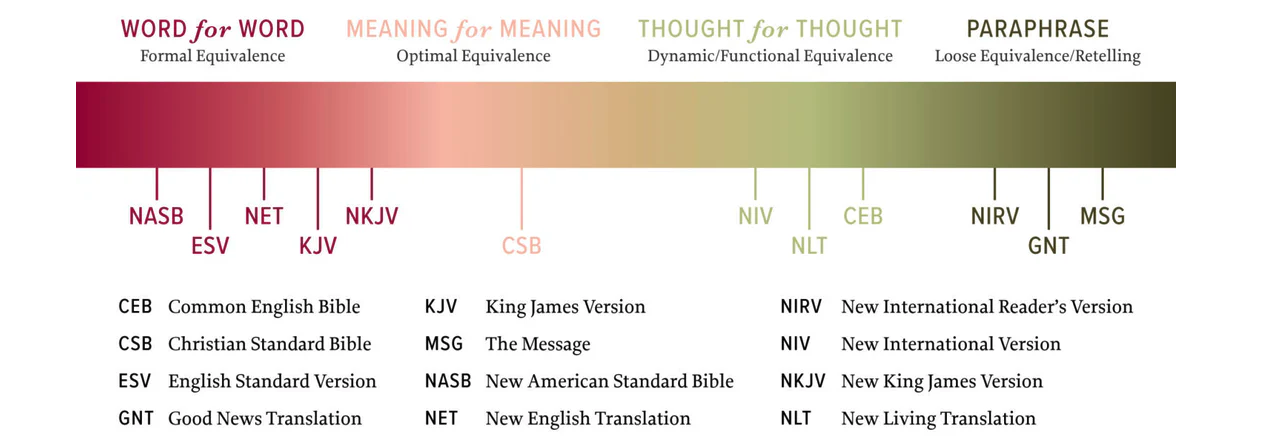
The source remains the same. The expression changes based on who needs to understand it.
Messaging Is Translation, Not Improvisation
Few examples illustrate this better than the way the Bible has been translated over time.
The source material remains constant. The truth does not change. Yet there are hundreds of translations, created not to distort meaning, but to preserve it across audiences with different languages, literacy levels, cultural contexts, and expectations.
Some translations remain as close as possible to the original wording. Others prioritize meaning over structure. Others still focus on comprehension and narrative flow. None of these approaches exist because the truth is negotiable. They exist because understanding is not automatic.
This is the same challenge product marketing faces every day.
Your product has a fixed reality. It does what it does. It solves specific problems. It produces measurable outcomes within real constraints. None of that changes based on who is listening.
What does change is the context your buyers bring with them.
Different roles hear risk differently. Different industries define value differently. Different stages of maturity interpret urgency differently. Expecting one expression of truth to land equally across all of them is not discipline. It is wishful thinking.
The Translation Spectrum Applied to Messaging
In biblical scholarship, translation is often described as a spectrum, ranging from strict literalism to paraphrase. That spectrum maps cleanly to how messaging actually works in B2B organizations, whether teams acknowledge it or not.
At one end is literal accuracy. This is the language of specifications, documentation, security reviews, and compliance requirements. In product marketing terms, this is source-of-truth language. It matters deeply. It protects credibility. It prevents over-claiming. It ensures the organization stays grounded in what is real.
But literal accuracy alone rarely persuades. When used as the primary messaging layer, it assumes shared context that buyers do not yet have. Precision arrives before relevance, and clarity suffers as a result.
Moving along the spectrum is meaning-for-meaning translation. Here, the truth remains intact, but the language shifts. Internal jargon gives way to market language. Feature mechanics give way to value articulation. The focus moves from how something works to why it matters.
This is where positioning lives. It is the level at which buyers begin to understand what problem you actually solve, why it matters now, and how you are meaningfully different. For most B2B organizations, this is where the majority of external messaging should reside.
Further still is thought-for-thought translation. This is where messaging adapts to the functional priorities of different audiences. The product has not changed. The outcome has not changed. The entry point has.
A CFO hears the same truth through the lens of risk, predictability, and downside protection. An operator hears it through workflow friction and time saved. A security leader hears exposure and audit confidence. An executive hears belief, direction, and strategic clarity.
This is not spin. It is not dilution. It is functional equivalence.
At the far end of the spectrum sits paraphrase. This is the realm of vision, category narratives, and market point of view. When undisciplined, it becomes dangerous. When anchored, it becomes powerful.
Paraphrase does not invent truth. It speaks to truth at the belief level. It answers a different question: why should this matter at all?
What Must Stay Fixed—and What Cannot
This is where messaging either scales or collapses.
Certain things must never change. The customer problem you solve. The actual capability of the product. The outcomes you can prove. The tradeoffs that exist. These are non-negotiable.
Other things must change by design. Language. Emphasis. Abstraction level. Starting point.
When organizations fail to separate these, they either freeze messaging in the name of consistency or allow it to sprawl in the name of relevance. Neither approach works for long.
Product marketing exists to govern this boundary.
Why Messaging Breaks Down in Practice
Most messaging breakdowns are not creative failures. They are translation failures.
Organizations confuse consistency with repetition and wonder why buyers disengage. Sales teams rewrite messaging in the field and slowly erode trust. Product teams resist abstraction entirely, making the product inaccessible to anyone outside the core team. Storytelling floats free of reality and credibility degrades quietly.
In almost every case, the underlying conflict is the same. Teams are arguing about translation level, not truth.
Storytelling as a Translation Layer
Storytelling is often misunderstood in B2B because it’s treated as decoration rather than discipline.
When teams talk about storytelling, the conversation tends to drift toward tone, creativity, or emotional appeal. Those elements matter, but they’re not what make storytelling effective in complex buying environments. What matters is the role storytelling plays in helping different audiences understand the same underlying truth.
At its core, storytelling is a form of translation. It doesn’t change what is true about a product or company. It changes how that truth is entered, processed, and remembered.
In most B2B contexts, buyers are not lacking information. They are lacking orientation. They are trying to understand why something matters, where it fits, and how it connects to the problems they are already accountable for solving. Storytelling creates that orientation by providing a coherent path into the details that follow—a discipline we’ve explored before in the context of B2B storytelling and complex buying environments.
This is why effective storytelling does not replace accuracy. It precedes it. A well-constructed narrative establishes relevance and belief first, so that technical detail can land with meaning rather than resistance. Without that groundwork, even the most precise messaging can feel abstract or disconnected.
The challenge is that storytelling only works when it remains tethered to reality. When narratives drift away from what the product can actually do, credibility erodes quickly. But when storytelling is treated as a disciplined translation layer—anchored in truth and adapted to audience context—it becomes one of the most reliable ways to preserve integrity while enabling understanding at scale.
A System, Not a Style
When messaging works, it’s rarely because someone found the perfect phrase.
It works because the organization has a way to translate truth consistently—across products, audiences, and moments of growth—without starting from scratch every time.
That doesn’t happen through taste or discipline alone. It requires structure.
Without a system, messaging tends to swing between extremes. Some teams lock language down so tightly that relevance erodes. Others optimize endlessly for context, rewriting the story each time until coherence disappears. Both are symptoms of the same underlying problem: translation is happening ad hoc.
A system doesn’t eliminate variation. It governs it.
It creates shared understanding about what must remain fixed, what can flex, and where judgment is required. It allows different teams to speak to different audiences without losing the thread of truth that holds the organization together.
When messaging becomes systematized in this way, consistency stops meaning repetition. It starts meaning integrity.
When One Message Isn’t the Problem
When messaging breaks down, teams often assume the solution is refinement.
Rewrite the headline. Tighten the value proposition. Standardize the language. Run another round of alignment. These efforts are usually well intentioned—and occasionally helpful—but they rarely address the underlying issue.
Most of the time, the problem isn’t that the message is wrong. It’s that the same expression of truth is being forced into contexts it was never designed to serve.
When messaging sounds consistent but fails to resonate, clarity is rarely the issue. When sales decks say the same thing but land differently, alignment is rarely the issue. When internal debates fixate on wording without ever resolving, preference is rarely the issue.
The issue is translation.
Organizations that struggle here tend to treat messaging as something to perfect rather than something to govern. They search for the “right” phrasing instead of establishing shared understanding about what must remain fixed, what can flex, and how truth should adapt as audiences change.
When that governance is missing, teams compensate in predictable ways. Some over-constrain language in the name of consistency, sacrificing relevance. Others optimize endlessly for context, rewriting the story each time until coherence erodes. Both approaches create friction because neither addresses how messaging is meant to scale.
When translation is treated deliberately, something shifts. Consistency stops meaning repetition. Alignment stops meaning uniformity. Messaging becomes less fragile and more durable—able to hold its shape across products, roles, and growth stages without losing credibility.
At that point, the question is no longer why the message sounds different every time it’s explained. The question becomes whether the organization has built the conditions for truth to be understood wherever it needs to travel.
When messaging works, it’s rarely accidental. It’s the result of a philosophy that treats truth, translation, and scale as inseparable.
You can read more about that philosophy here.